
Florida Statute 768.0706 Compliance Assessments
FCP-certified CPTED assessments that document substantial compliance with HB 837 and establish your presumption against liability - required for all Florida multifamily properties.
What is Florida Statute 768.0706?
Florida Statute 768.0706 establishes the security measures multifamily property owners must substantially implement to qualify for a presumption against liability in negligent security cases. The law covers three areas: physical security measures (including one-inch deadbolts, window and sliding door locks, peepholes, pool gate access control, and dusk-to-dawn lighting in parking areas, walkways, and common spaces), a documented CPTED assessment of the property no more than three years old, and proper crime deterrence and safety training for employees within 60 days of hire.
The statute does not require perfection. It requires substantial compliance, meaning a documented, good-faith implementation of the listed measures, and that compliance must be supported by a qualified CPTED assessment.
Security measures required under the statute
Florida Statute 768.0706 identifies several security measures that must be substantially implemented in order to receive the presumption against liability.
Security Camera Systems
Camera systems must monitor property entry and exit points and maintain recorded footage for at least thirty days to assist in offender identification.
Lighting Requirements
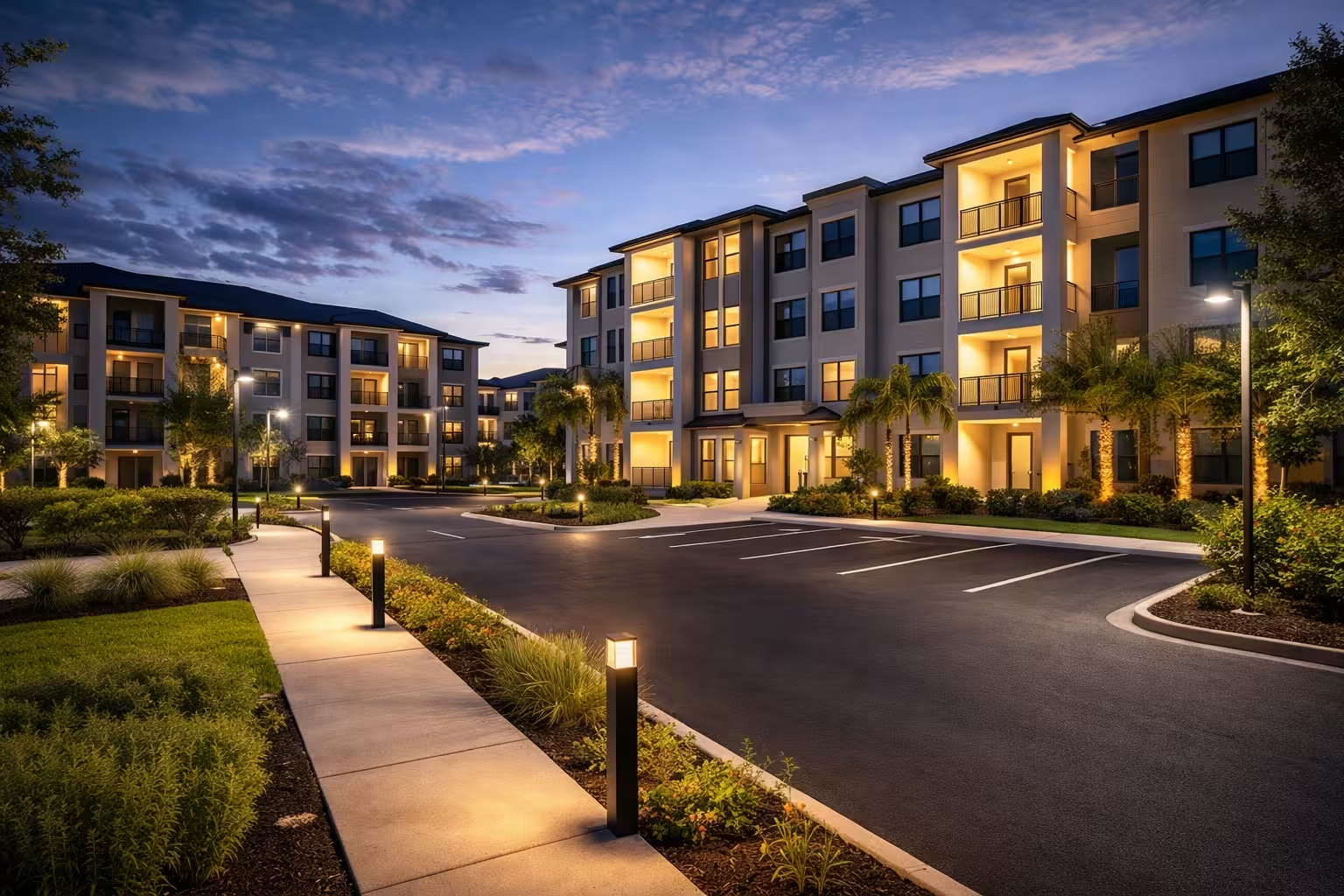
Parking areas must maintain an average illumination of at least 1.8 foot-candles per square foot, measured at 18 inches above the surface, from dusk to dawn. Common areas including walkways, laundry facilities, porches, and building entrances must be illuminated from dusk until dawn using photocell controls or equivalent automated systems. Tricorn measures actual foot-candle levels during every nighttime assessment and documents the readings in the compliance report.
Access Control and Locks
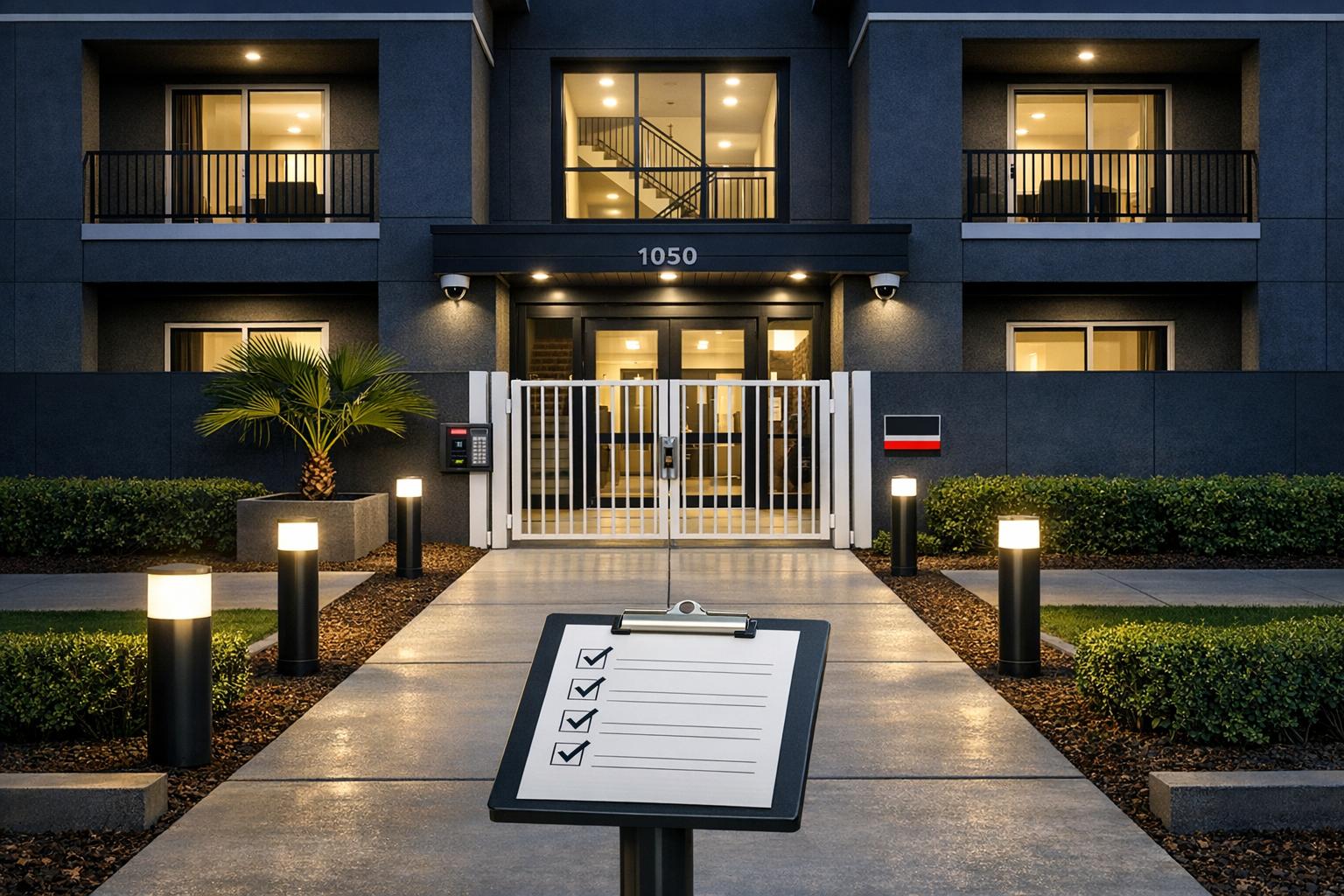
Dwelling units must include one inch deadbolt locks and windows and exterior sliding doors must include locking devices.
Pool Area Security
Pool areas must include locked gates with controlled key or fob access.
Door Viewers
Each dwelling unit door must include a peephole or viewer when the door does not contain a window or adjacent window.
Does Your Property Meet Florida Security Requirements?
Identify security risks before they become problems.
Who is qualified to perform the CPTED assessment?
Every Tricorn CPTED assessment is conducted by a Florida Crime Prevention Through Environmental Design Practitioner (FCP) designated by the Florida Crime Prevention Training Institute.
The FCP credential is the qualification required under Florida Statute 768 0706 for multifamily properties seeking the presumption against liability. Outside Florida, it signals that your assessment is being performed by a practitioner trained to national CPTED standards rather than a general security consultant or facilities inspector. This distinction matters in litigation. Assessments conducted by unqualified parties are routinely challenged by opposing counsel in premises liability cases. A report authored by a credentialed practitioner carries weight that a generic security audit does not.
Every Tricorn assessment is conducted by an FCP-certified practitioner with real-world security and operational experience. Our team includes Mario deGraaf (FCP, CPD) with 17+ years military intelligence experience and hundreds of completed assessments, Kyle Scroggins (FCP) with 14+ years in multifamily security, Robert Gaskell (FCP), a U.S. Air Force veteran with 100+ assessments completed, and Seth Ryan (FCP), a U.S. Army Special Operations Ranger and former law enforcement officer. Meet the full team.
Who needs a compliance assessment?

Property Managers
Property managers are often the first line of accountability for 768.0706 compliance. Tricorn's assessments provide the documentation needed to demonstrate substantial compliance to ownership, insurance carriers, and legal counsel.
Real Estate Acquisition
Conduct a compliance review during due diligence to assess whether a target property meets 768.0706 statutory requirements before closing.
Property Owners
Evaluate your liability exposure and document compliance across your portfolio to protect the presumption against liability.
Real Estate Developers
Integrate CPTED principles into new multifamily developments and renovations to meet 768.0706 from day one.
Asset Managers
Assess compliance across your residential portfolio to manage risk, insurance terms, and potential liability exposure.
What happens if my property isn't in compliance?
A property that has not completed a qualifying CPTED assessment, or has not substantially implemented the statute's security measures, loses the presumption against liability in civil cases alleging negligent security. That shift matters in two places.
In litigation. Without the presumption, the plaintiff's burden in a negligent security case is materially lower. Prior crime foreseeability, lighting adequacy, access control, and site design all become open questions for the jury rather than factors weighted by statute. Settlements in Florida multifamily negligent security cases have reached the eight-figure range, and the presumption is often the single strongest defense available.
In insurance and risk review. Carriers are increasingly asking whether multifamily properties in Florida have completed a 768.0706-qualifying assessment. Non-compliance can affect premium, coverage terms, and renewal decisions, independent of whether any incident has occurred.
Compliance is not a one-time event. The statute requires the CPTED assessment be no more than three years old, and substantial compliance with the assessment's findings must be maintained. Properties that completed an assessment in 2023 or early 2024 should begin planning their reassessment.
Our Process
Property Review
Our team reviews available property information, existing security measures, and crime statistics for the property and surrounding neighborhood to identify potential risk factors.
On Site Inspection
Our assessor conducts an inspection of the property to review lighting conditions, access control features, cameras, and other security measures required under the statute.
CPTED and Environmental Evaluation
Environmental conditions such as visibility, natural surveillance, and property design are evaluated in relation to CPTED principles.
Report Review
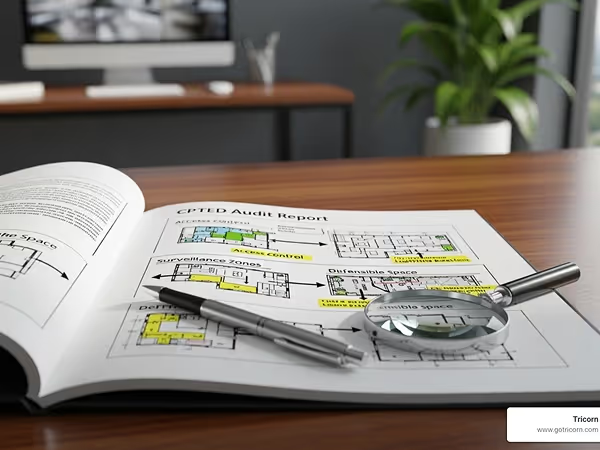
Clients receive a written report documenting observations and photographs related to the security measures described in the statute. Our team reviews the findings with the client and discusses potential next steps.
Locations We Serve for HB 837 Compliance Assessments
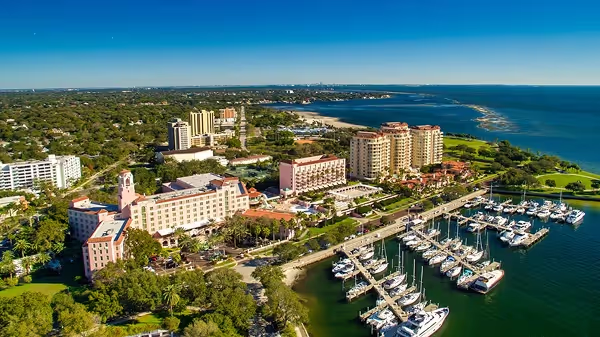
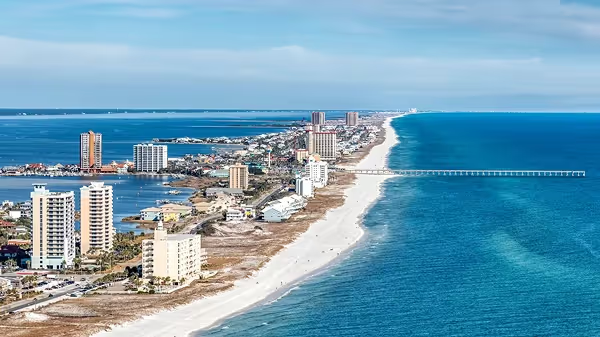
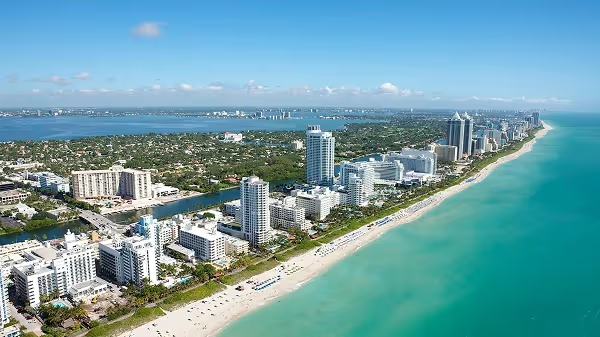
Tricorn supports multifamily property owners across Florida with Florida Statute 768.0706 compliance assessments, including the cities below.



Request a 768.0706 compliance assessment quote
Tell us about your property and compliance needs and we'll provide a scope, timeline, and fixed quote within one business day. No obligation.
Why Property managers choose Tricorn
Prefer to reach us directly
Frequently Asked Questions
Get answers about CPTED assessments and how they protect your property
Florida Statute 768.0706 establishes security requirements for multifamily residential properties and provides a presumption against liability in negligent security cases for owners who substantially comply. The statute was created by House Bill 837, Florida's 2023 tort reform legislation. Property managers and owners often use the terms interchangeably, but the statute is the operative law that governs compliance. For a full breakdown of the statute's security requirements, see our HB 837 security requirements checklist for multifamily property owners.
Florida Statute 768.0706 requires the CPTED assessment be conducted by either a law enforcement agency or a Florida Crime Prevention Through Environmental Design Practitioner (FCP) designated by the Florida Crime Prevention Training Institute. A general security consultant or facilities inspector does not meet the statutory requirement. Every Tricorn Assessment Group evaluation is performed by an FCP-certified practitioner.
The CPTED assessment must be no more than three years old to satisfy Florida Statute 768.0706. Properties that completed an assessment in 2023 or early 2024 should begin planning their reassessment now to maintain continuous compliance. Any significant changes to the property, such as renovations or expansions, may also warrant an updated evaluation before the three-year window expires.
No. Compliance with Florida Statute 768.0706 establishes a presumption against liability, which is a significant legal advantage but not absolute immunity. The presumption shifts the burden of proof in negligent security litigation and is often the strongest defense available to multifamily property owners, but a plaintiff may still challenge compliance itself or present evidence to rebut the presumption. For more on how the presumption works in practice, read what Florida apartment owners need to know about the presumption against liability.
Assessment cost depends on property size, configuration, and scope. A typical multifamily property assessment includes a daytime site evaluation, a nighttime lighting review, and a written report documenting findings and compliance status. Review our pricing page for a breakdown of the factors that affect assessment scope, or contact our team for a quote specific to your property.
Other Services We Provide

CPTED Assessments


Security Lighting Assessments

Security Vulnerability Assessments











.webp)