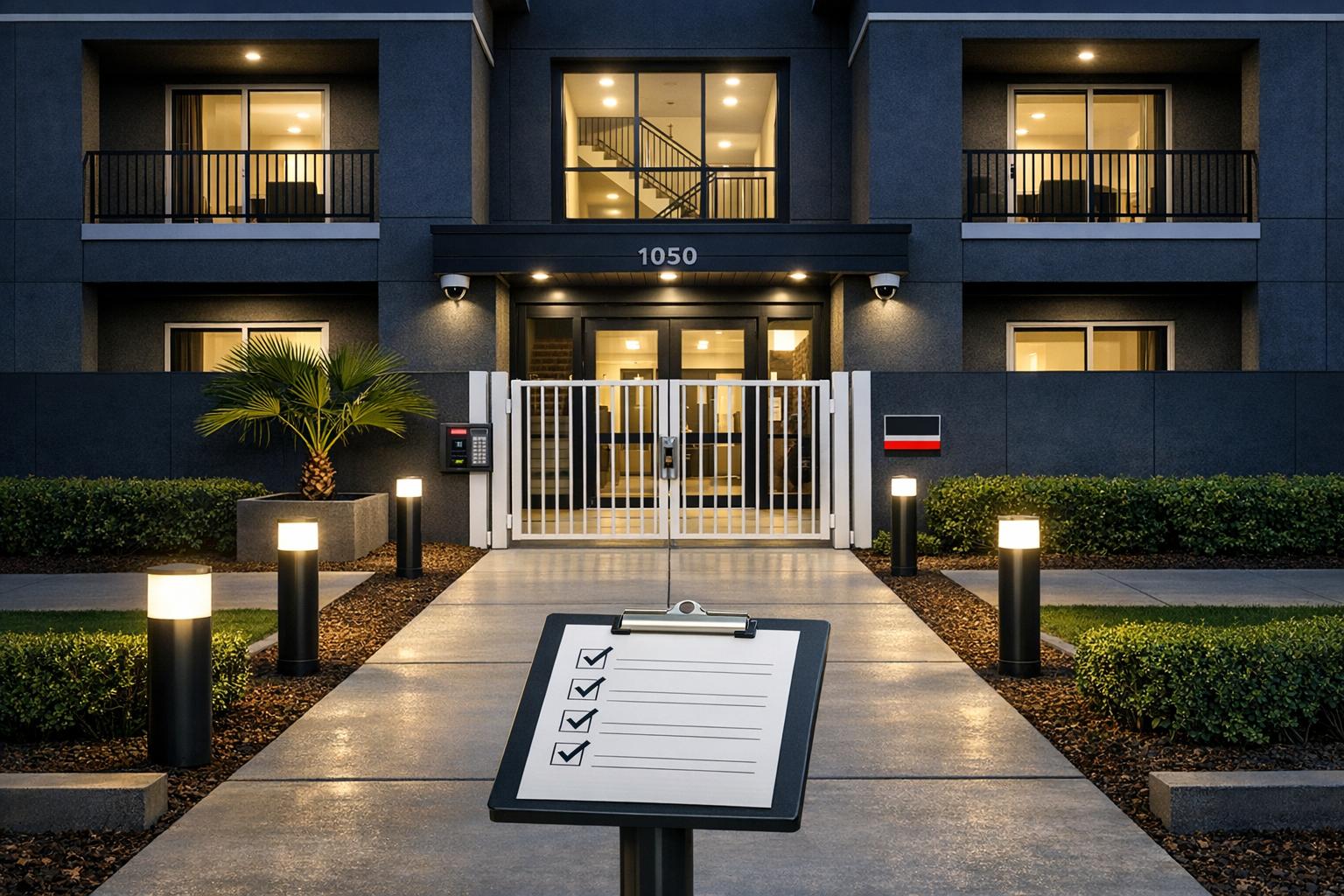
CPTED Assessment 3-Year Renewal | Florida Statute 768.0706 Reassessment Guide
April 2, 2026
Florida Statute 768.0706 does not provide permanent liability protection. The presumption against liability depends on maintaining current compliance, and that includes a CPTED assessment no more than three years old. When the assessment expires, the protection expires with it.
This is the part most property owners miss. They complete the initial assessment, check the box, and move on. Then the three-year mark passes without a reassessment on file and the statutory protection disappears, even if every deadbolt, camera, and light fixture is still in place.
When does the three-year clock start?
The clock starts on the date the assessment was completed and signed by the FCP-certified practitioner.
If your assessment was completed on June 15, 2024, it expires on June 15, 2027. There is no grace period in the statute.
When to schedule the reassessment
Schedule the reassessment at least 90 days before expiration. Three reasons:
FCP-certified assessors have limited availability during peak compliance periods. If your assessment expires in Q1, you are competing with every other property that completed their initial assessment near the January 2025 deadline.
If the reassessment identifies new deficiencies, your team needs time to address them before the prior assessment expires. A gap between an expired assessment and a completed reassessment leaves you exposed.
The written report, updated Management Action Plan, and any follow-up items need to be finalized and documented before the old assessment lapses.
Set a calendar reminder at the 2.5-year mark. That gives you a 6-month runway to schedule, complete, and document the renewal.
What changes between the initial assessment and the reassessment?
The reassessment is not a rubber stamp of the original. The assessor evaluates the property's current conditions, which may have changed significantly in three years:
Lighting degrades. Bulbs dim, fixtures fail, trees grow and block light paths. Parking lot lighting must still meet the 1.8 foot-candle standard at 18 inches above the surface. The assessor will remeasure with a light meter.
Landscaping changes sightlines. Hedges that were trimmed to the 2-foot/6-foot CPTED standard three years ago may now obstruct visibility near entryways and walkways.
Property layout changes. New buildings, expanded parking, added amenities like pools, or repurposed common areas can introduce access control gaps that did not exist during the original assessment.
Camera coverage may no longer match entry and exit points. Construction, renovations, or new access points can create blind spots in a system that was fully compliant at installation.
Access control credentials accumulate. Former residents, past employees, and completed contractors may still have active fobs or keys.
The assessor will produce a new written report documenting current conditions, updated considerations, and any deficiencies that need remediation.
What happens if you miss the deadline?
Your property loses the presumption against liability immediately. This is not a technicality. If a negligent security incident occurs on your property and your most recent CPTED assessment is older than three years, the statutory protection under 768.0706 does not apply.
The burden of proof shifts to you. Without a current assessment on file, a plaintiff's attorney does not need to overcome the presumption. Your property is treated as if no assessment was ever completed.
You cannot fix this retroactively. A gap in compliance is a permanent part of your property's security record. If an incident occurs during the lapse, completing a new assessment after the fact does not restore the protection for the period when you were out of compliance.
What documentation to keep on file
For the reassessment to support your liability protection, maintain:
- The complete reassessment report
- A current Management Action Plan documenting each consideration, who is responsible, and the target completion date
- Records showing implementation of prior assessment considerations (work orders, receipts, maintenance logs)
- Updated employee training records (all current staff trained, new hires within 60 days)
- Lighting measurement records from the reassessment
- Camera system maintenance and footage retention logs
If a lawsuit arises, documentation is the primary evidence of due diligence. Properties that meet the physical requirements but cannot produce records face the same exposure as properties that never installed the hardware.
Frequently asked questions
Does the 3-year requirement apply to HOAs and condos?
Yes. Florida Statute 768.0706 applies to all multifamily residential properties with five or more dwelling units on a particular parcel, including HOA-managed condos and townhomes.
Can I use a different assessor for the renewal?
Yes. The reassessment does not need to be conducted by the same practitioner or firm that performed the initial assessment. It must be conducted by an FCP-certified practitioner or law enforcement agency.
What if we made improvements since the last assessment?
Improvements are documented in the reassessment. If you upgraded lighting, added cameras, or improved access control since the original assessment, the reassessment report will reflect the current state and may result in fewer deficiency findings.
Does the reassessment cost the same as the initial assessment?
Pricing depends on property size, unit count, and scope. Request a reassessment quote for a fixed price within one business day.
Request a CPTED assessment quote
Tell us about your property and you'll receive scope, timeline, and a fixed quote within one business day. No obligation.
Why Property managers choose Tricorn
Prefer to reach us directly