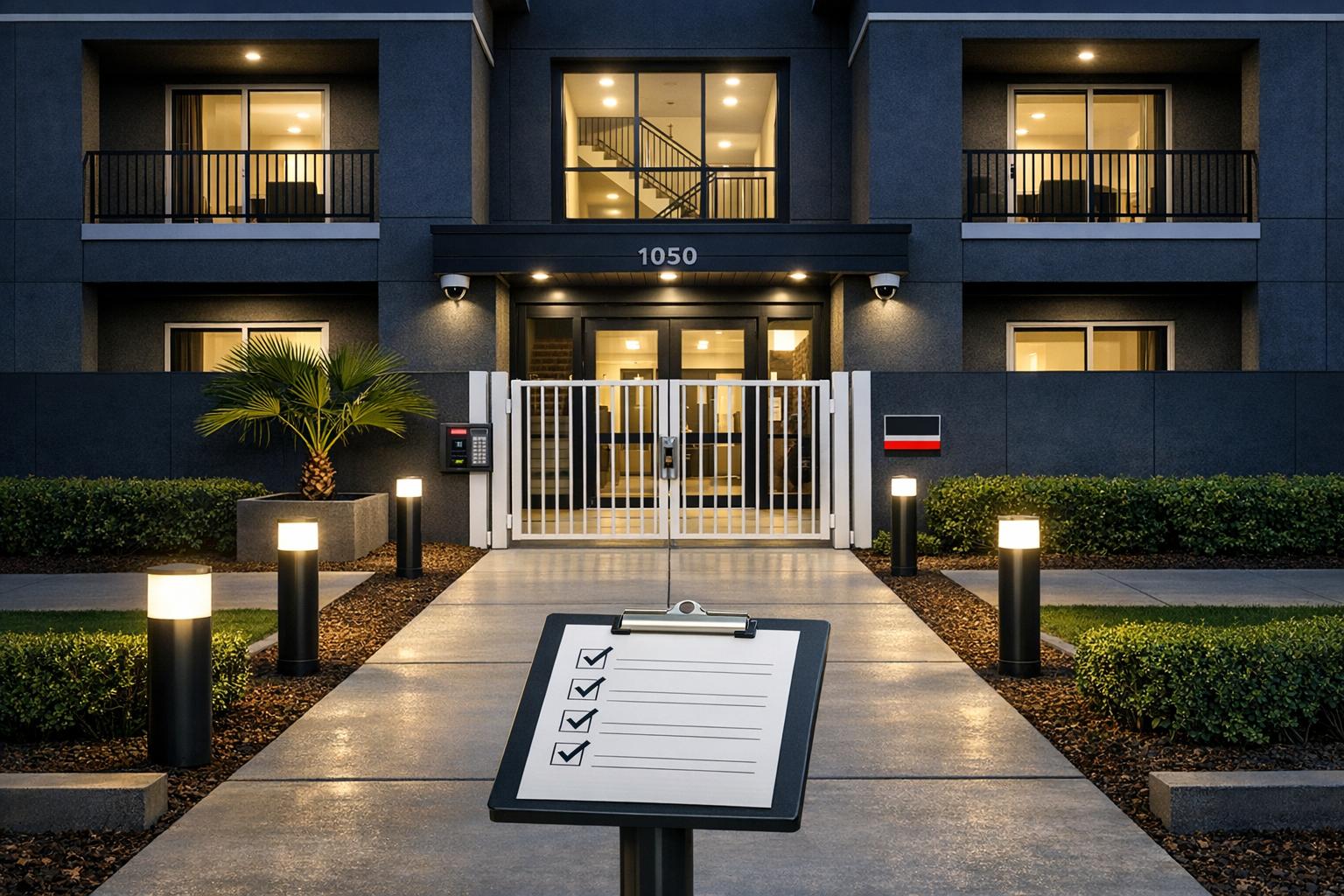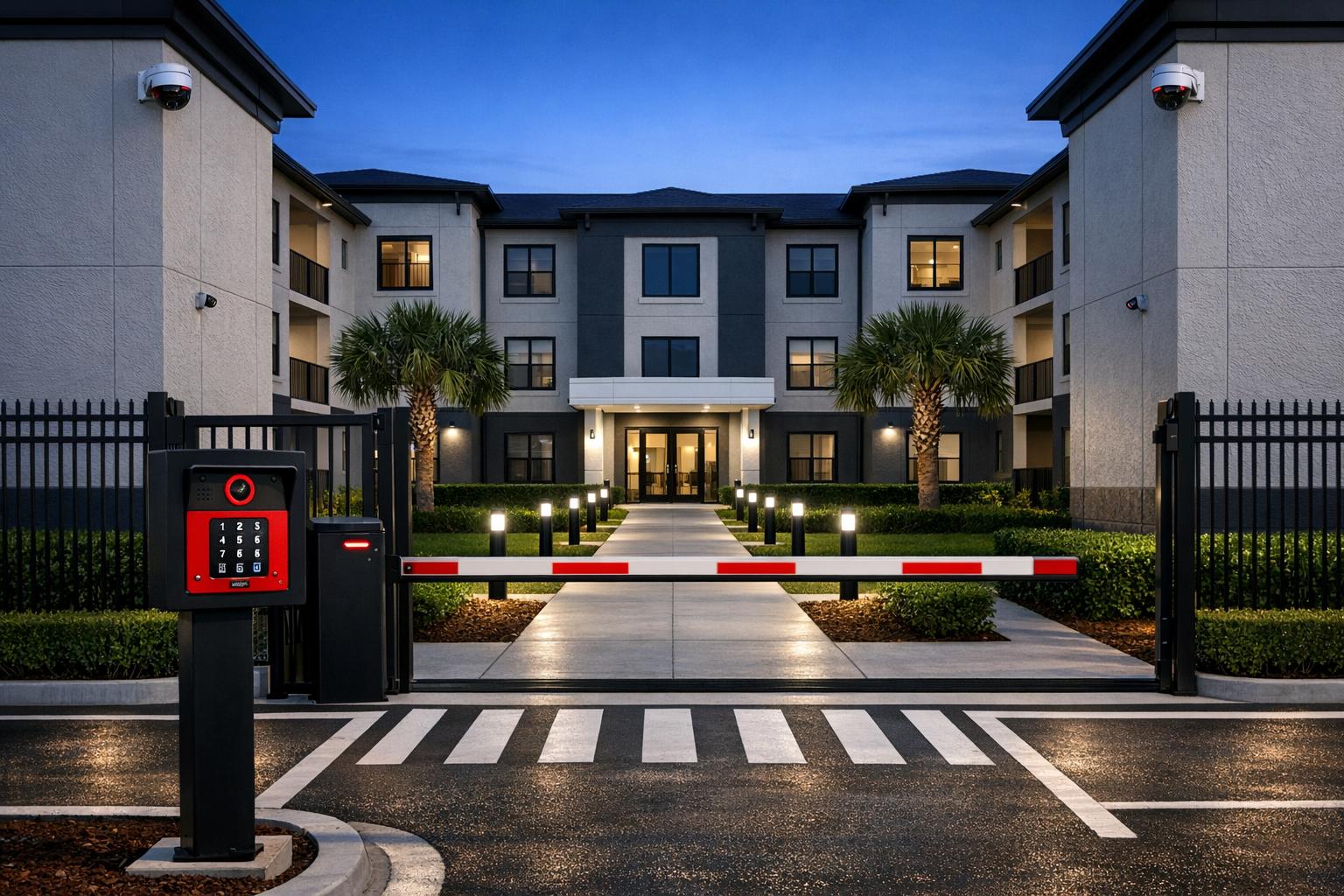
What Does a CPTED Assessment Include for Florida HB 837 Compliance?
March 26, 2026
Rini de Graaf
What Does a CPTED Assessment Include for Florida HB 837 Compliance?
Property owners and managers across Florida are still asking the same practical question: what does a CPTED assessment actually include? Under Florida Statute 768.0706, qualifying multifamily residential properties must have a CPTED assessment completed and documented to support the statute’s presumption against liability. The law came out of House Bill 837, which changed several parts of Florida’s civil remedies framework and added this multifamily security provision.
For owners, operators, and property managers, that means the CPTED assessment is not just a general site walk. It should be a structured review of how the property’s design, maintenance, visibility, lighting, and access control affect safety conditions. If you are evaluating next steps, start by reviewing our CPTED assessment service and the overview of Florida Statute 768.0706 compliance.
Why the CPTED Assessment Matters Under House Bill 837
Florida Statute 768.0706 requires the assessment to be completed by a law enforcement agency or a Florida CPTED practitioner designated by the Florida Crime Prevention Training Institute. The assessment must be no more than three years old, and the owner or principal operator must remain in substantial compliance with the considerations.
That matters because the assessment is intended to document more than whether a property has lights or cameras. It is meant to review how the site functions, where vulnerabilities exist, and what improvements may be needed to reduce crime exposure and strengthen safety conditions.
What a CPTED Assessment Reviews
A CPTED assessment for an apartment complex usually reviews the property through the core CPTED principles of natural surveillance, natural access control, territorial reinforcement, and maintenance. These are widely recognized principles in CPTED practice and are reflected in current guidance from the FCPTI.
In practical terms, that means the assessment usually looks at:
- lighting conditions in parking lots, walkways, entrances, and common areas
- visibility across the site, including concealment areas and blind spots
- access control at gates, entry points, pool areas, and residential buildings
- landscaping that may block sightlines or create hiding areas
- maintenance issues that affect safety and contributes to criminal confidence
- wayfinding, signage, and property layout
- how the site connects to surrounding streets, activity areas, and neighboring uses
Daytime Site Review
Most CPTED assessments begin with a daytime review of the property. This helps the assessor understand the overall layout, building arrangement, access points, amenity areas, pedestrian routes, parking layout, landscaping, fencing, and signs of disorder or deferred maintenance.
During the daytime review, the assessor may examine:
Entrances and circulation
The assessor reviews how people and vehicles move into, through, and around the property. This can include vehicle entrances, pedestrian paths, breezeways, gates, pool areas, mail areas, and other common-use locations. Good access control should guide legitimate movement without creating confusion or unnecessary hidden areas.
Landscaping and visibility
Shrubs, tree canopies, fences, walls, and other site features are reviewed to see whether they support or reduce visibility. CPTED guidance consistently stresses that landscaping should not obstruct sightlines or create concealment areas.
Building and site condition
Broken fixtures, vandalism, deteriorated paint, damaged fencing, and neglected spaces can all affect the way a property is perceived and used. CPTED guidance treats maintenance as a core safety factor because visible neglect can invite disorder and reduce natural oversight.
Nighttime Review and Lighting Assessment
For multifamily properties, the nighttime portion of the assessment is often one of the most important. Florida Statute 768.0706 specifically addresses lighting in parking lots, walkways, laundry rooms, common areas, and porches, and requires parking lot lighting to average at least 1.8 foot-candles at 18 inches above the surface.
At night, the assessor may review:
Parking lot lighting
Lighting levels, fixture placement, dark areas, and consistency across parking surfaces are reviewed. Poor coverage in parking lots is a recurring issue in negligent security matters because these areas often combine vehicle traffic, pedestrian movement, and limited natural oversight.
Walkways and building approaches
Walkways should be visible, readable, and supported by lighting that helps residents and guests move safely. Poor lighting at stairs, unit approaches, breezeways, and sidewalk connections can reduce visibility and create avoidable risk.
Common areas and amenities
Pool areas, mail kiosks, laundry rooms, gathering spaces, and recreational areas should be reviewed after dark, not just during daytime conditions. Lighting that appears acceptable during the day may perform poorly at night.
Glare and shadowing
A CPTED review is not only about adding more light. Lighting should improve visibility without creating glare, harsh contrast, or shadowed pockets that reduce visibility. CPTED guidance recommends lighting that supports observation and comfort rather than over-lighting problem areas.
Access Control and Hardware Review
The assessment also reviews whether physical security measures support the site’s intended use and the statutory requirements. Florida Statute 768.0706 identifies several specific hardware items, including 1-inch deadbolt locks, locking devices on windows and sliding doors, and controlled pool access.
A CPTED assessment may review:
- whether pool gates are locked and functioning properly
- whether residential buildings and amenity areas have clear access boundaries
- whether doors, windows, and sliding doors have functional locking devices
- whether gates, fencing, and barriers guide movement appropriately
- whether uncontrolled access points create avoidable exposure
This part of the review often overlaps with a broader property security vulnerability assessment when owners want a deeper look at site-wide risks.
Crime Data, Site Context, and Property Conditions
A useful CPTED assessment does not review the site in isolation. It should also consider property context, prior incidents if available, surrounding land uses, and the way people use the property at different times of day. Current CPTED guidance recommends reviewing site observation, contextual factors, temporal patterns, and available crime data as part of a meaningful assessment process.
That may include:
- surrounding streets and adjacent activity generators
- neighborhood visibility and access conditions
- known problem locations on the property
- resident or staff observations
- past calls for service or incident trends, when available
This is one reason why a CPTED assessment is more useful than a simple checklist. It helps connect property conditions to actual risk patterns.
What the Property Owner Receives
A completed CPTED assessment should produce documentation the owner or operator can review and act on. Depending on the assessor and scope, that may include:
- a written report
- site observations and photographs
- identified deficiencies or vulnerabilities
- property-specific considerations
- compliance-related notes tied to Florida Statute 768.0706
- suggested follow-up priorities
The most important value is not the document by itself. It is the ability to identify vulnerabilities, prioritize corrective work, and maintain records showing that the property is actively addressing safety conditions.
Who Can Perform the Assessment
Under the statute, the assessment must be completed by a law enforcement agency or a Florida CPTED practitioner designated by FCPTI. That requirement is important enough that owners should verify the assessor’s qualifications before scheduling the work.
If your property is preparing for a review, you can contact us or read our related guide on Florida Statute 768.0706 compliance checklists.
What Property Managers Should Do Before Scheduling
Before a CPTED assessment, property managers should gather the materials that will help the review move efficiently.
Helpful items to prepare
- property maps or site plans
- known incident locations
- prior inspection or repair records
- contact information for the on-site team
Having this information available can make the assessment more practical and help the final recommendations reflect actual operating conditions.
FAQ
Is a CPTED assessment required for apartment complexes in Florida?
For qualifying multifamily residential properties covered by Florida Statute 768.0706, a CPTED assessment is required as part of the listed security measures tied to the presumption against liability. The statute applies to properties with at least five dwelling units on a parcel.
Who can perform a CPTED assessment for Florida Statute 768.0706?
The statute says the assessment must be completed by a law enforcement agency or a Florida CPTED practitioner designated by the Florida Crime Prevention Training Institute.
Does a CPTED assessment only focus on lighting?
No. Lighting is one important part of the review, but the assessment also looks at visibility, access control, landscaping, maintenance, territorial reinforcement, and site context.
Final Thoughts
A CPTED assessment for House Bill 837 and Florida Statute 768.0706 compliance should be a practical review of how a multifamily property functions during the day and at night. It should identify where visibility is weak, where access control is incomplete, and where maintenance or layout issues may increase crime exposure.
For apartment owners and property managers, the goal is simple: understand property conditions clearly, document the review, and act on the considerations. If you need help evaluating your property, contact Tricorn to schedule a CPTED assessment or discuss your next steps.
Request a CPTED assessment quote
Tell us about your property and you'll receive scope, timeline, and a fixed quote within one business day. No obligation.
Why Property managers choose Tricorn
Prefer to reach us directly