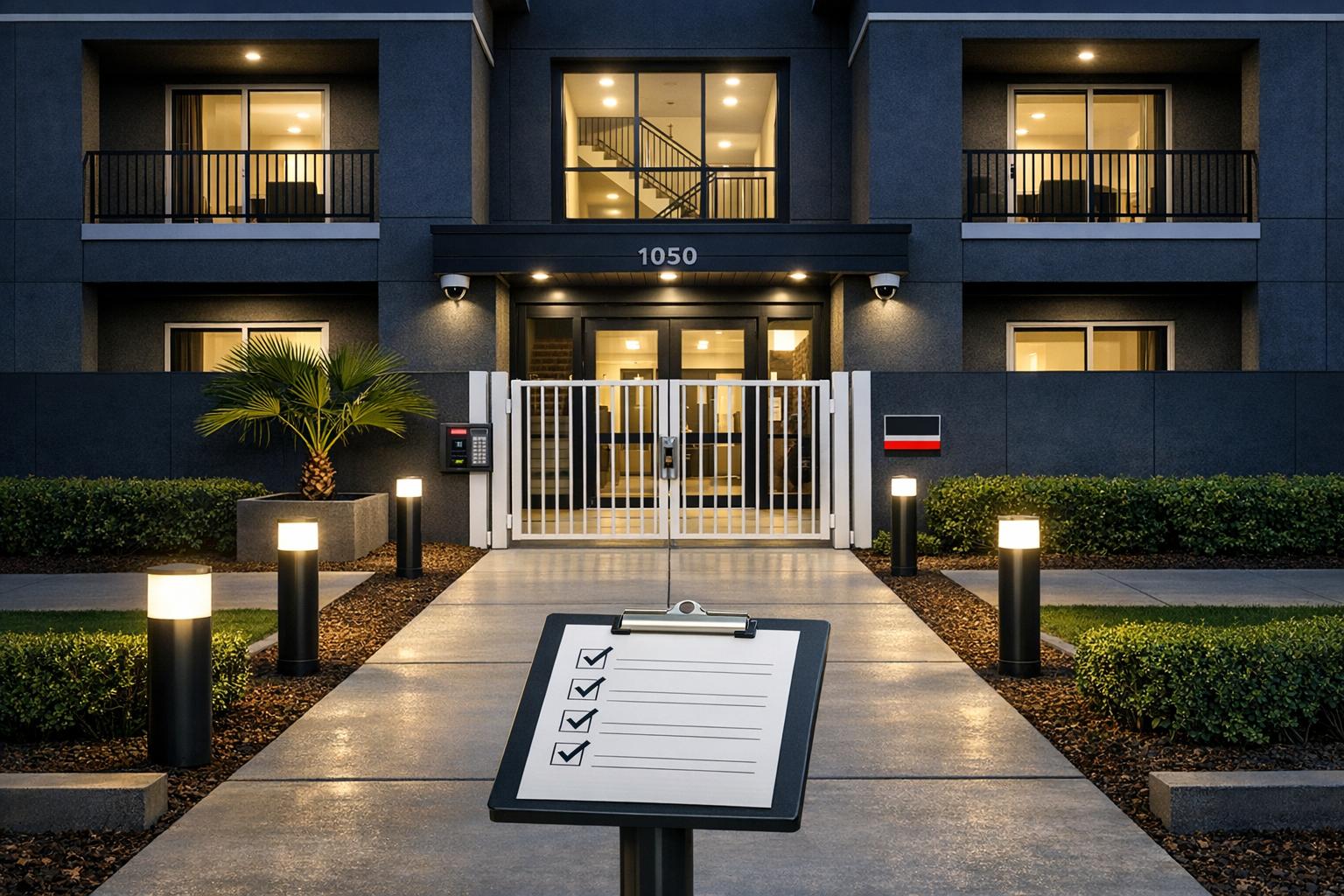
Tampa CPTED Assessments for Florida Statute 768.0706 Compliance
March 23, 2026
Tampa CPTED Assessments for Florida Statute 768.0706 Compliance
Apartment owners and property managers in Tampa are looking more closely at CPTED assessments because Florida Statute 768.0706 ties a documented assessment to the presumption against liability for qualifying multifamily residential properties. The statute requires the assessment to be no more than three years old and completed by a law enforcement agency or a Florida CPTED practitioner designated by the Florida Crime Prevention Training Institute. Tampa also has a large and active housing environment through city and housing authority programs, which makes property-specific security review especially relevant for multifamily operators in this market.
If you are evaluating next steps for a property in the Tampa area, start with our Tampa CPTED assessments, review our CPTED assessment service, and see how the statute fits into broader Florida Statute 768.0706 compliance planning.

Why Tampa Property Owners Are Paying Attention to CPTED Assessments
Florida Statute 768.0706 came out of House Bill 837 and created a multifamily residential property safety and security section within Florida law. The statute lists several security measures, including cameras, lighting, certain locking hardware, pool gate access control, employee training, and the CPTED assessment requirement. The Florida Senate’s bill summary and bill page both confirm that the law created a presumption against liability for owners or principal operators that substantially implement the specified measures.
For Tampa owners and managers, the practical issue is not just whether the property has lights or gates. The bigger question is whether the site’s actual conditions support visibility, safe movement, access control, and ongoing maintenance in a way that matches both CPTED principles and the statute’s requirements.
What a Tampa CPTED Assessment Usually Includes
A CPTED assessment is typically a structured review of how the property’s design, layout, lighting, visibility, and maintenance affect safety conditions. Florida law defines crime prevention through environmental design in section 163.503 as the use of environmental design concepts such as natural surveillance, natural access control, and territorial reinforcement to reduce criminal opportunity and support positive social interaction.
In practical terms, a Tampa CPTED assessment for an apartment complex often reviews:
- parking lot lighting and visibility
- walkways, building approaches, and pedestrian routes
- pool areas, gates, and amenity access
- landscaping that affects sightlines
- entrances, exits, and natural access control
- signs of deferred maintenance or disorder
- common areas, mail areas, and gathering spaces
- how the site connects to surrounding streets and neighboring uses
This is one reason owners often combine a CPTED review with a security lighting assessment or a broader property security vulnerability assessment.
Daytime Review of the Property
Most assessments begin with a daytime review. This helps the assessor understand the site layout, building arrangement, parking configuration, pedestrian circulation, landscaping, fencing, and general property condition.
Visibility and sightlines
During the daytime review, the assessor looks for features that support or reduce natural surveillance. Landscaping, walls, breezeways, corners, detached structures, and parking layouts can all affect how easily residents, staff, and visitors can observe activity on the property. CPTED Environmental guidance and Florida’s statutory definition both emphasize visibility as a core part of crime prevention through design.
Access control
The daytime review also looks at how people move through the site. That includes vehicle entrances, sidewalks, stairwells, gates, pool access points, and building entries. Good access control helps direct legitimate use and reduce confusion or uncontrolled movement through sensitive areas.
Maintenance conditions
Maintenance is a practical CPTED issue. Broken fixtures, damaged fencing, poor signage, overgrown landscaping, and visible neglect can affect how the property functions and how it is perceived. That matters because CPTED practice treats maintenance as part of long-term safety, not as a separate housekeeping issue.
Nighttime Review and Lighting Conditions
For Tampa apartment complexes, the nighttime review is often one of the most important parts of the assessment. Florida Statute 768.0706 specifically requires a lighted parking lot with an average of at least 1.8 foot-candles at 18 inches above the surface, plus lighting in walkways, laundry rooms, common areas, and porches from dusk until dawn or by photocell or similar control.
Parking lots
Parking lots are specifically named in the statute. The assessor may review overall coverage, dark gaps, fixture spacing, visibility around parked vehicles, and the transition between parking surfaces and pedestrian paths. These areas are often critical because they combine vehicle traffic, pedestrian movement, and lower levels of natural observation after dark.
Walkways and building approaches
Walkways should be easy to follow and clearly visible. The review may look at sidewalks, breezeways, stairs, entrance landings, and routes between buildings and parking areas. Lighting should help people move safely without creating harsh glare or deep shadowing.
Common areas and amenities
Common areas, porches, laundry rooms, pool approaches, mail areas, and other shared spaces should also be reviewed after dark. Florida Statute 768.0706 names several of these areas directly, which means the assessment should evaluate not only whether lighting exists, but whether the lighting supports practical visibility and usability.
If you want a more detailed walkthrough of this part of the process, see our related guide on security lighting requirements for apartment complexes.
Tampa Site Context Matters
A CPTED assessment should not review the property in isolation. It should also consider surrounding streets, neighboring activity generators, nearby pedestrian routes, and the way residents and visitors approach and use the property. Tampa’s housing environment includes city-led housing programs and multiple affordable and multifamily communities through the Tampa Housing Authority, which reinforces the need for location-specific property review rather than generic advice.
That does not mean every Tampa property faces the same issues. It means each site should be reviewed based on its own layout, access points, lighting performance, and maintenance conditions.
Who Can Perform the Assessment
The statute is specific on this point. The assessment must be completed by a law enforcement agency or a Florida CPTED practitioner designated by FCPTI. FCPTI states that the Florida CPTED Practitioner designation requires successful completion of the Basic and Advanced CPTED training.
Before scheduling, owners and managers should confirm the assessor’s qualifications and make sure the review is documented clearly enough to support follow-up and ongoing compliance efforts.
What Property Managers Should Prepare
A Tampa CPTED assessment is more useful when the property team prepares the right background information in advance.
Helpful items to gather
- site map or property layout
- lighting maintenance records
- known incident locations or recurring problem areas
- gate and access control information
- pool access details
- repair logs for fixtures, locks, or fencing
- contact information for the on-site team
This helps the assessment focus on actual property conditions instead of broad assumptions.
How the Assessment Connects to Florida Statute 768.0706 Compliance
A CPTED assessment is one part of the larger compliance picture. Florida Statute 768.0706 also references cameras at entry and exit points, certain locking devices, controlled pool gate access, and employee crime deterrence and safety training. The CPTED review helps owners identify where the property supports those requirements and where additional work may be needed.
For Tampa owners who want to organize the rest of the review, our Florida Statute 768.0706 compliance checklist is a useful starting point.
Final Thoughts
A Tampa CPTED assessment should give apartment owners and managers a practical understanding of how the property performs during the day and at night. It should identify weak visibility, incomplete access control, maintenance issues, and other conditions that may affect both safety and Florida Statute 768.0706 compliance.
If you need help reviewing a Tampa property, contact Tricorn to schedule a CPTED assessment and discuss your next steps.
Your Safety is Our Priority
Complete the form below to request a CPTED assessment for your property.