Florida Statute 768.0706 and the Role of CPTED Assessments in Security Negligence Cases
December 28, 2024
Written By Rini de Graaf
Florida Statute 768.0706 changed the legal landscape for multifamily property owners facing negligent security claims. The statute creates a presumption against liability for property owners who substantially implement specific security measures, including a documented CPTED assessment conducted by an FCP-certified practitioner. That presumption has direct consequences for how negligent security cases are litigated in Florida courts.
What the Presumption Against Liability Means in Practice
Under Florida's modified comparative negligence framework introduced by HB 837, a plaintiff who is more than 50% at fault for their own injuries is barred from recovery. The statute of limitations for negligence claims was also shortened from four years to two years.
Florida Statute 768.0706 adds another layer of protection. When a multifamily property owner can demonstrate substantial compliance with the statute's security requirements, the burden of proof shifts. The plaintiff must overcome the presumption that the property owner took reasonable steps to prevent criminal activity on the premises. This presumption can support a motion for summary judgment, potentially resolving the case before trial.
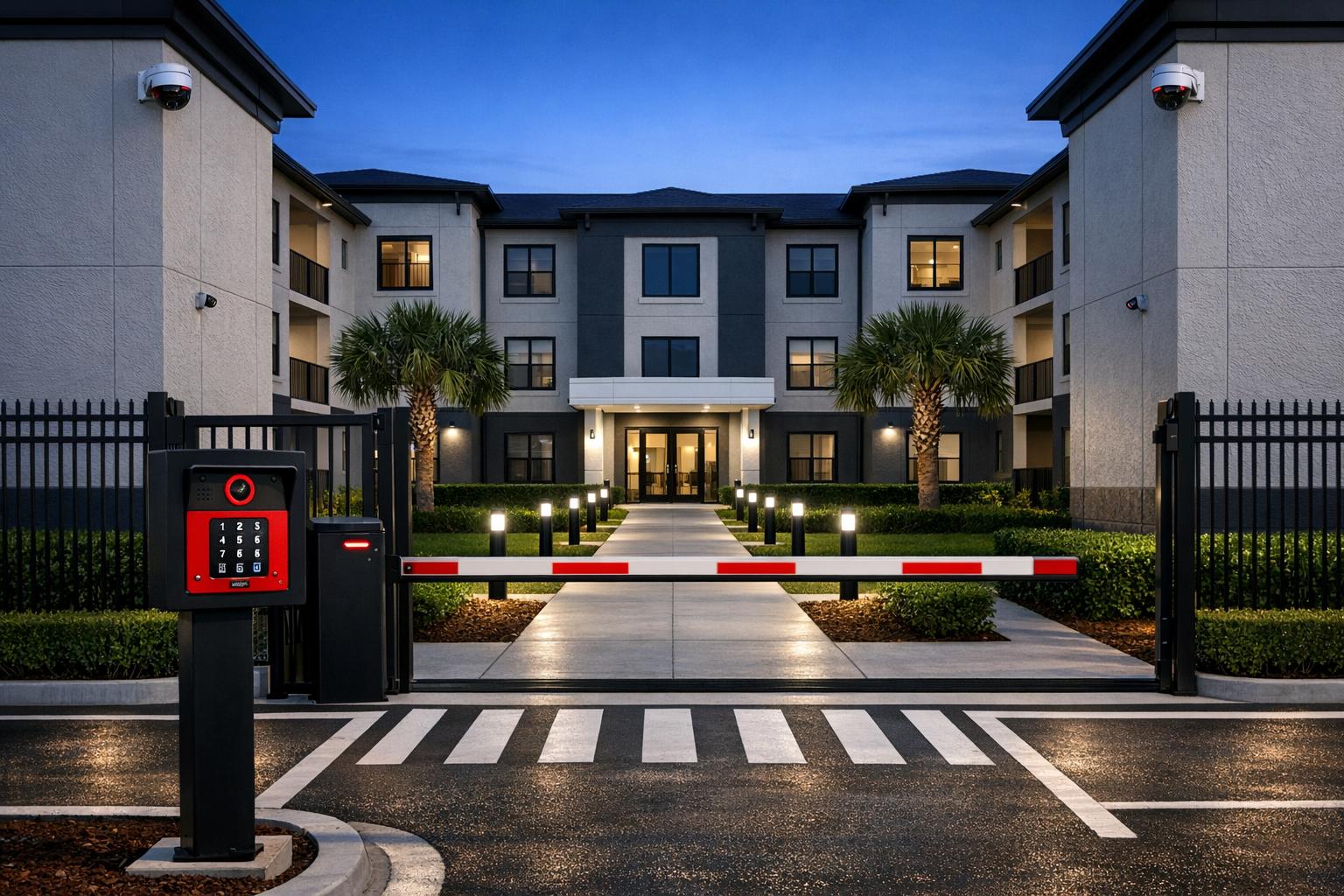
The security measures required for the presumption include camera systems at entry and exit points with 30-day footage retention, parking lot lighting averaging at least 1.8 foot-candles at 18 inches, deadbolt locks and window locking devices on all dwelling units, locked pool gates with controlled access, a documented CPTED assessment conducted by an FCP-certified practitioner, and crime deterrence training for all property employees.
How a CPTED Assessment Functions as Evidence
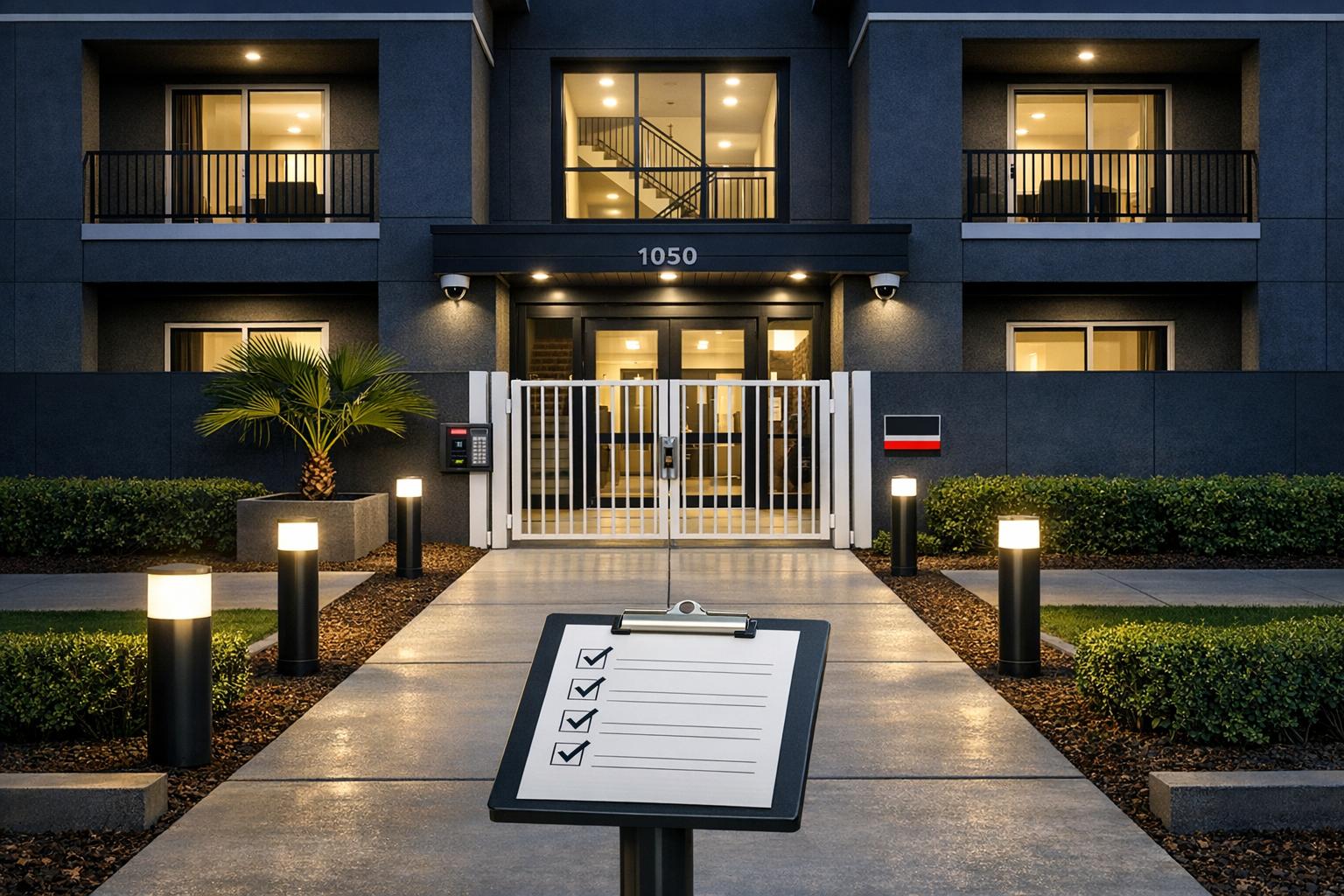
A CPTED assessment is not a checklist. It is a documented evaluation of how a property's physical environment affects crime risk. The assessment examines lighting conditions, sightlines, access points, landscaping, building orientation, and common area design. Each observation is recorded with photographs and mapped to the four core CPTED principles: natural surveillance, natural access control, territorial reinforcement, and maintenance.
In litigation, this documentation serves multiple purposes. It establishes that the property owner was aware of environmental conditions affecting security. It demonstrates that a qualified practitioner evaluated the property and provided specific considerations for improvement. And it creates a dated record showing the property's compliance status at a specific point in time.
For the presumption under 768.0706 to hold, the assessment must be conducted by a Florida Crime Prevention Through Environmental Design Practitioner (FCP) designated by the Florida Crime Prevention Training Institute. Assessments conducted by general security consultants or uncredentialed parties do not satisfy the statute's requirements and are routinely challenged by opposing counsel.
The Role of the Assessor as Expert Witness
When a negligent security claim proceeds despite the presumption, the assessor who conducted the CPTED evaluation may be called to testify. The assessor can speak to the property's conditions at the time of assessment, the methodology used, the considerations provided, and whether the property owner implemented changes consistent with those considerations.
This is where practitioner credentials matter. An FCP-certified assessor with documented field experience carries more weight in deposition and trial testimony than a general consultant. Courts evaluate expert witnesses based on education, training, experience, and methodology. The FCP designation, combined with a track record of completed assessments, establishes the foundation for qualified expert testimony.
Mario deGraaf (FCP, CPD), Tricorn's lead assessor, has completed hundreds of CPTED assessments for multifamily properties across Florida and provides expert witness services for negligent security cases. His assessment reports are structured specifically to withstand legal scrutiny and support the property owner's defense.
Substantial Compliance and the Three-Year Window
The statute requires that the CPTED assessment be no more than three years old and that the property owner remain in substantial compliance with the assessment's considerations. "Substantial compliance" does not require perfection. It requires documented evidence that the property owner made reasonable efforts to implement the assessment's findings.
Properties that allow their assessment to lapse beyond the three-year window lose the presumption. Properties that receive an assessment but ignore its considerations may also fail to establish substantial compliance. The assessment itself is not enough. The property owner must demonstrate ongoing commitment to the security measures identified in the report.
For property managers approaching their reassessment window, scheduling a new evaluation before the three-year deadline ensures continuous compliance coverage. A gap in coverage creates a period of exposure where the presumption does not apply.
What This Means for Property Owners and Attorneys
For property owners, the message is straightforward. A documented CPTED assessment conducted under Florida Statute 768.0706 is the single most important step toward establishing the presumption against liability. The assessment must be current, conducted by a qualified FCP practitioner, and supported by ongoing compliance efforts.
For attorneys handling negligent security cases on either side, the assessment report is central to the litigation. Plaintiff's counsel will examine whether the assessment was properly conducted, whether the property owner implemented its considerations, and whether the three-year window was maintained. Defense counsel will rely on the documented assessment to invoke the presumption and move for summary judgment.
As more properties complete their initial assessments and the first wave of reassessments begins, the body of case law interpreting 768.0706 compliance will grow. Property owners who invest in thorough, well-documented assessments conducted by credentialed practitioners are building the strongest possible defense against future claims.
To discuss a CPTED assessment for your property or to learn more about expert witness services for a negligent security case, contact Tricorn.
Request a CPTED assessment quote
Tell us about your property and you'll receive scope, timeline, and a fixed quote within one business day. No obligation.
Why Property managers choose Tricorn
Prefer to reach us directly